




Beurer Magazine
Blood Pressure Management
The Different Measurement Methods – Wrist or Upper Arm?
Blood pressure can be measured on the upper arm or wrist. The measurement results are, as various tests show, just as reliable when measured by either method. However, with increasing age, the blood vessels can narrow due to deposits or harden due to arteriosclerosis. This particularly affects the wrist arteries, which are further from the heart, making precise measurement more difficult. Older people and smokers should therefore take measurements on the upper arm. Wrist devices are unsuitable for patients with diabetes, as the arteries may be calcified or porous.
Differences between both arms
There can be deviations in the blood pressure measurement results between the right and left arm of up to 10 mmHg. This is because the left arm is closer to the heart. To better compare the measurement results, the measurement should always be taken on the same arm. In case of doubt, always measure on the arm where the higher blood pressure values occurred at the beginning.
Why are there measurement differences between measurements on the upper arm and wrist?
During a wrist measurement, the wrist must be at heart level. If the arm is placed flat on the table in a sitting position, for example, the blood pressure is overestimated by about 7-8 mmHg because there is a difference to heart level.
Faulty measurement results also occur with wrist measurement in the case of heart rhythm disorders and changes in the arteries in the wrist, for example due to age. It is therefore possible to get inaccurate results, especially in older people. The arteries on the upper arm are not so sensitive to such influences. Therefore, occasional comparative measurements on the upper arm are recommended.
Wrist blood pressure monitors are also not recommended for patients with diabetes, as calcifications in the blood vessels of the wrist are common in these patients. You should also consider that the blood pressure values on the left and right wrist can deviate from each other.
General recommendations
Blood pressure fluctuations are normal. Even with a repeat measurement, there can be considerable differences between the measured values. For this reason, single or irregular measurements do not provide a reliable statement about your blood pressure. Taking regular measurements under comparable conditions is the best way to gain a reliable assessment.
To make reliable statements about your blood pressure, it is best to measure it regularly and always at the same time while sitting. Ideally, measure in the morning before taking any medications and in the evening before going to bed.
You should not perform any physical activities or use a sauna at least 30 minutes beforehand and ensure an empty bladder before taking the measurement. You should be completely relaxed for 5 minutes before the measurements. Do not eat, drink, move or speak. Keep your arm still during the measurement and do not clench your hand into a fist.
- Always measure at the same time of day.
- Rest for around five minutes before measuring.
- Sit upright and keep your feet flat on the floor.
- Apply the cuff to bare skin, not over clothing.
- Keep the cuff at heart level.
- Wait around one minute before repeating a measurement.
Considerations for wrist measurement
If you want to measure your blood pressure on your wrist, it is important that your wrist is at heart level throughout the entire measurement. Otherwise, the measurement results will be distorted. To do this, sit down, support your elbow on a table and always measure on bare skin, not over a jumper or shirt.

Different measurement results
Various influences can affect blood pressure and your measurement as a result.
These include:
- Psychological influences such as fear and excitement
- Movement
- Muscle tension
- Speaking
- Noise and other environmental influences such as television or radio
Errors in measurement
In addition, errors during the measurement can distort the results. Examples of the most common mistakes in blood pressure measurement are:
- Cuff was applied too tight or too loose
- Cuff is not at heart level
- The break between two measurements was too short
- Talking or moving during the measurement
- The cuff is applied over a thick garment
- The sleeve of the garment is too tight and obstructs blood flow
- Measuring more than three times in a row
White-coat hypertension
Even if you do everything right when measuring at home, your blood pressure may measure differently to at the doctor's surgery. The blood pressure values measured during a doctor's visit are often higher. This is because patients are usually more relaxed at home than in the doctor's office. This phenomenon is called white-coat hypertension.
Some people react exactly the opposite and show lower values in the doctor's office, where they feel safe. In these cases, this is referred to as practice normotension.
In both cases, a long-term blood pressure measurement should be carried out to obtain reliable measurement results.

Blood pressure monitors from Beurer
Beurer offers you an extensive range of blood pressure monitors, with the right device for everyone.
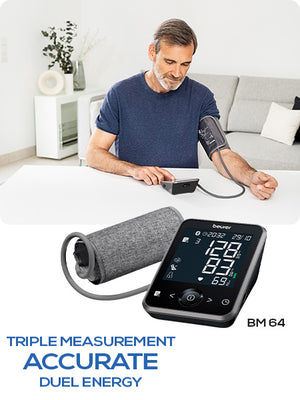
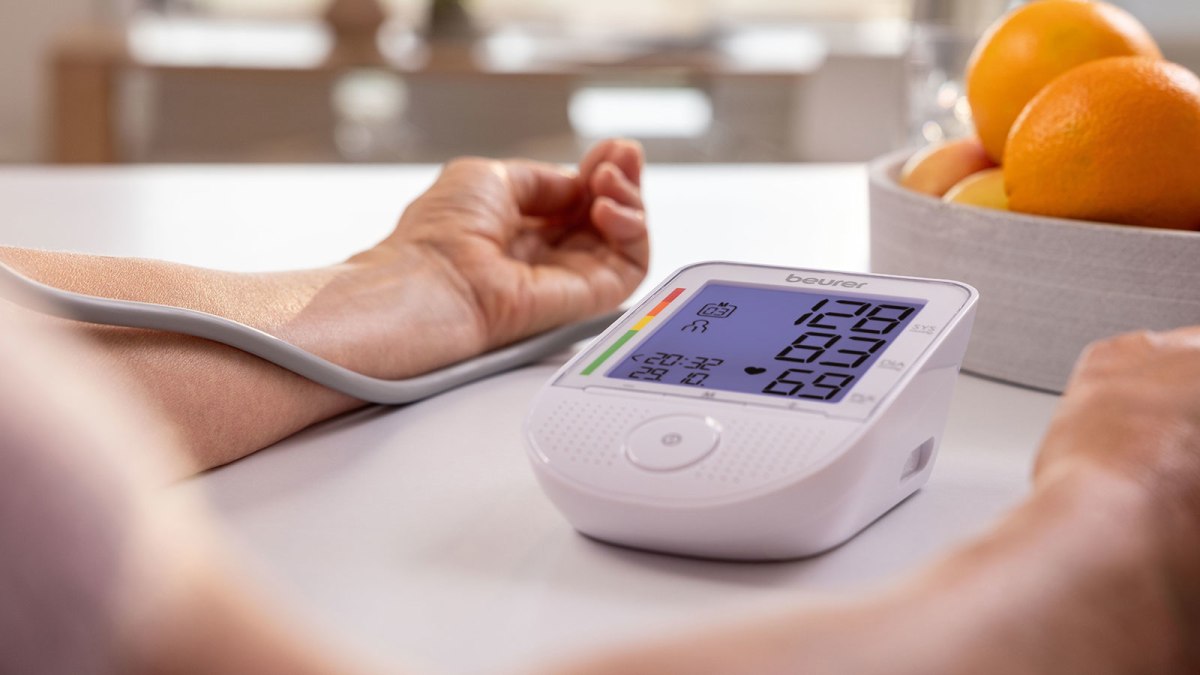
Whether easy-to-use with one-button operation, elegant with black touch-sensor display or with extended arrhythmia detection function, Beurer upper arm blood pressure monitors offer a solution for different users.
Small, handy and easy to use, Beurer wrist blood pressure monitors also prove to be reliable companions on the go.
Selected Beurer models also offer practical digital functions that make it easier to record and track measured values over time.